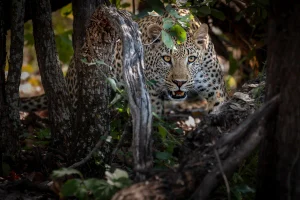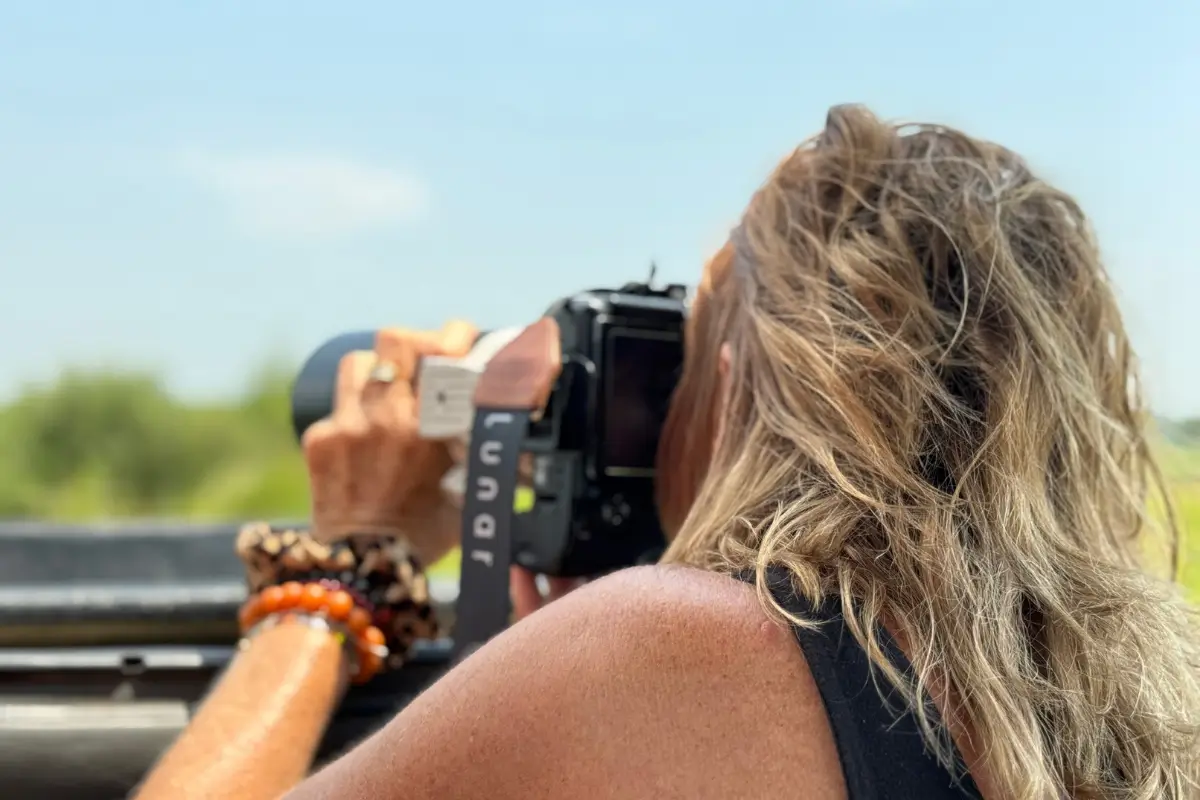
Uganda is a place that asks you to slow down.
Not because there is little to see, but because there is so much. The light changes quickly over open savannah. Forest paths narrow into deep green silence. Waterways carry hippos, crocodiles, elephants and birds through the frame. And then, somewhere in the cool shade of Bwindi Impenetrable Forest, a mountain gorilla looks back at you with a stillness that stays long after the shutter closes.
The course is limited to a small group, which gives each traveller space to learn, observe and shoot with intention.
A photographic journey through Uganda’s wild contrasts
Uganda is often called the Pearl of Africa, and for good reason. Few destinations offer such a rich blend of habitats in one journey.
This course begins with the wide wilderness of Murchison Falls National Park, where the Nile forces its way through a narrow gorge and the surrounding plains open into classic safari country. From there, the route moves into Kibale Forest for chimpanzee tracking, Queen Elizabeth National Park for savannah and waterway photography, Bwindi Impenetrable Forest for gorilla trekking, Lake Bunyonyi for a quieter lakeside pause, and Lake Mburo for a final walking safari.
For photographers, this variety matters.
- Each destination teaches a different way of seeing:
- Open plains for composition, animal behaviour and golden-light wildlife images
- River and channel cruises for low-angle wildlife and bird photography
- Rainforest settings for low-light work, patience and storytelling
- Lakeside landscapes for mood, reflection and environmental portraits
- Walking safaris for ground-level observation and slower, more deliberate photography
The result is not just a collection of sightings. It is a visual story of Uganda’s landscapes, wildlife and atmosphere.
Pakuba Safari Lodge: comfort inside Murchison’s wild beauty
The first lodge base is Pakuba Safari Lodge in Murchison Falls National Park. Its position makes it especially well suited to the opening days of the course, where the focus is on game drives, Nile scenery and the powerful presence of Murchison Falls.
Pakuba describes itself as offering a luxury African safari experience with suites designed as personal havens, including thoughtful comforts, excellent cuisine and views across the plains of Murchison Falls National Park. The lodge setting supports exactly what photographers need after long hours in the field: space to rest, review images and prepare for the next drive.
For this Uganda course, Pakuba aligns beautifully with the photographic rhythm of Murchison:
- Strong access to savannah wildlife subjects
- Expansive views that keep guests connected to the landscape
- Comfortable rooms for recovery between early starts and afternoon drives
- A warm lodge atmosphere after active days in the park
- A setting that supports both wildlife observation and quiet reflection
Murchison Falls National Park itself is one of Uganda’s flagship wildlife areas. The Uganda Wildlife Authority highlights the park’s powerful waterfall, Nile cruises, elephants, giraffes, crocodiles, hippos and exceptional birdwatching. For photographers, this creates strong opportunities for both action and atmosphere.
Chimpanzee Forest Lodge: a gentle base near Kibale’s primate world
From Murchison, the course moves towards Kibale Forest National Park, one of Uganda’s most important primate destinations. The stay here is at Chimpanzee Forest Lodge, a property set on 100 acres of lawns, gardens, tea plantations, pasture and indigenous forest, with panoramic views towards Kibale National Park, crater lakes and the Rwenzori Mountains.
This kind of setting is ideal before and after chimpanzee tracking.
Forest photography is slower than savannah photography. It asks for patience, careful exposure and awareness of movement in low light. A lodge surrounded by natural textures, open gardens and views into the broader landscape helps photographers stay in that rhythm.
- Chimpanzee Forest Lodge adds value to the course through:
- Proximity to Kibale’s chimpanzee tracking environment
- Forest, garden and tea-plantation surroundings
- A calm setting for recovery after travel and trekking
- Scenic views that offer a broader sense of place
- A natural transition from savannah photography into rainforest work
Kibale is known for chimpanzee tracking and chimpanzee habituation experiences. It offers photographers the chance to work with behaviour, gesture and fleeting forest light — all essential skills for anyone wanting to photograph primates with sensitivity and depth.
Tabingi Safari Lodge: a wilderness base for Queen Elizabeth National Park
Queen Elizabeth National Park brings another shift in the journey. Here the story opens again into savannah, crater landscapes, birdlife and the Kazinga Channel.
The course includes a stay at Tabingi Safari Lodge, located near Queen Elizabeth National Park. The lodge describes itself as an eco-friendly base for safari activities, with cottages spaced to maximise privacy and enhance the wilderness feeling. It also offers practical features such as free Wi-Fi, charging areas, self-contained rooms, decks and a close-to-nature atmosphere.
These details are especially useful for photographers. Charging points, privacy and comfortable spaces matter when cameras, batteries and memory cards need attention after a full day out.
Tabingi supports the Queen Elizabeth section of the course by offering:
- A close-to-nature safari atmosphere
- Practical facilities for photographers, including charging areas
- Private, spaced cottages for rest between activities
- Easy alignment with game drives and Kazinga Channel boat photography
- A wilderness setting that keeps guests immersed in the park experience
The Kazinga Channel is one of the strongest photographic highlights in this region. Boat safaris here often provide excellent angles on hippos, elephants, buffalo, crocodiles and waterbirds. From a photographer’s perspective, the channel allows for layered compositions: animals at the waterline, birds in flight, reflections, and the soft drama of late-day light.
Broadbill Forest Camp: quiet immersion on the edge of Bwindi
Bwindi Impenetrable Forest is one of the emotional centres of the Uganda experience.
The course stays at Broadbill Forest Camp, a mid-range lodge in Ruhija on the eastern edge of Bwindi Impenetrable Forest. The camp is closely associated with gorilla trekking and birding, and its forest-edge setting places guests in the right environment before one of the most memorable photographic encounters in Africa.
Broadbill’s appeal lies in its simplicity and position. This is not a place that competes with the forest. It supports the forest experience.
For Kim’s Uganda course, Broadbill Forest Camp is a strong fit because it offers:
- A location on the edge of Bwindi Impenetrable Forest
- A quiet, forest-connected atmosphere before and after trekking
- Access to one of Africa’s most important gorilla habitats
- A setting suited to reflection after a powerful wildlife encounter
- Strong relevance for birders and wildlife photographers
Bwindi is recognised for its ancient rainforest and mountain gorilla conservation. The Uganda Wildlife Authority notes that Bwindi protects approximately 459 mountain gorillas, almost half of the world’s remaining population. Photographing gorillas here is not simply about getting the image. It is about understanding distance, respect, restraint and the privilege of being briefly accepted into their world.
Birdnest Resort: lakeside stillness at Lake Bunyonyi
After the intensity of gorilla trekking, the course slows down at Lake Bunyonyi with a stay at Birdnest Resort.
This is an important pause in the itinerary. Photographic journeys need contrast. After days of tracking, driving and concentrating, Lake Bunyonyi offers water, islands, quiet horizons and a gentler visual language.
Birdnest Resort is positioned on the shores of Lake Bunyonyi and presents itself as a lakeside resort in one of Uganda’s most peaceful settings. The resort highlights the lake’s serenity, hikes, beautiful islands and cultural activities such as Batwa visits. It is also described as a suitable haven for travellers around the gorilla trekking route.
For photographers, this section offers a different type of image-making:
- Lakeside landscapes and reflections
- Island scenes and boat-based compositions
- Slower environmental storytelling
- Quiet morning and evening light
- A chance to reset before the final safari leg
Birdnest Resort aligns well with the course because it gives guests time to breathe, review, absorb and photograph Uganda at a more contemplative pace.
Hyena Hill Lodge: wide views near Lake Mburo National Park
The final lodge stay is Hyena Hill Lodge near Lake Mburo National Park. The lodge sits on the edge of the park close to Sanga Gate and is known for its views over Lake Mburo National Park. It offers comfortable cottages with private bathrooms and the option of bicycle safaris in or outside the park.
This final stop gives the course a grounded, intimate close.
Lake Mburo is well suited to walking safaris and slower wildlife observation. Unlike the more dramatic primate encounters or big-park game drives earlier in the trip, this landscape encourages attention to smaller details: tracks, movement, posture, bird calls, antelope behaviour and the relationship between animals and open space.
Hyena Hill Lodge supports this closing chapter through:
- Views over Lake Mburo National Park
- Comfortable cottages for the final night of the journey
- A position close to Sanga Gate
- Access to walking and active safari experiences
- A quieter setting for the last photographic lessons of the course
Ending with a walking safari is a fitting choice. It brings the photographer down from the vehicle and back into the landscape. The camera becomes less about reach and more about awareness.
Why this course suits photographers
Kim McLeod’s Uganda Photographic Safari Experience is designed around more than destination collecting. It follows a natural learning curve.
The journey gives photographers repeated opportunities to practise different skills in real situations:
- Anticipating animal behaviour on game drives
- Working with changing light and dust on the savannah
- Managing shutter speed and stability on boat safaris
- Photographing responsibly around primates
- Composing in dense forest and low-light conditions
- Capturing landscape mood and travel details between wildlife encounters
- Building a coherent visual story across multiple habitats
Because the group is small, the experience feels personal. This matters on a photographic safari. Guidance is more useful when there is time to ask questions, review choices and adapt to each photographer’s level.
More than a safari, a story through the lens
Uganda offers rare photographic range in one route.
One day may begin with giraffes moving through soft morning light. Another may place you under the canopy with chimpanzees calling through the forest. Later, you may sit in silence as a gorilla family feeds in the green shadow of Bwindi.
The lodges and resorts on this itinerary support that rhythm. They offer comfort, location, access and atmosphere without pulling attention away from the true subject: Uganda itself.
For photographers who want to grow, observe deeply and return with images that carry feeling as well as detail, Kim McLeod Photography’s Uganda course offers a warm, intimate and richly varied way to experience the wild heart of East Africa.
Contact Kim McLeod Photography to enquire about availability and reserve your place on this small-group Uganda Photographic Safari Experience.